
Before You Bet, Read This Morocco Breakdown
Morocco national football team is North Africa’s leading men’s side and a serious global contender, governed by the Royal Moroccan Football Federation and representing Morocco in CAF and FIFA competit...
Before You Bet, Read This Morocco Breakdown
Morocco national football team is North Africa’s leading men’s side and a serious global contender, governed by the Royal Moroccan Football Federation and representing Morocco in CAF and FIFA competition. The Atlas Lions made history at the 2022 FIFA World Cup in Qatar by reaching the semi-finals, becoming the first African team to do so. Morocco also won the 1976 Africa Cup of Nations and finished fourth at the 2022 World Cup after defeating Belgium, Spain, and Portugal. Its modern identity combines a compact defensive block, fast transitions, elite full-backs, and technically gifted midfielders developed through European football. Players such as Achraf Hakimi, Brahim Díaz, and Noussair Mazraoui provide high-level experience, while Youssef En-Nesyri remains a major penalty-area threat. Before assessing Morocco in 2026, compare tournament context, opponent quality, injuries, and confirmed lineups rather than relying on reputation alone.
Imagine a team that can defend for long spells, counter at frightening speed, and still control possession when the match demands it. That is Morocco. I will be honest with you: the 2022 run was not a lucky accident, but repeating it requires sharper attacking efficiency.
Stadium View follows Morocco’s fixtures, tactical changes, player form, and 2026 World Cup implications. We treat prediction as analysis, not theatre. The sensible move is to study the matchup before considering any market.
Here is the practical starting point:
- Check the confirmed squad and injury report.
- Separate World Cup form from friendly-match form.
- Compare Morocco’s defensive record with the opponent’s chance creation.
- Review location, travel, weather, and knockout pressure.
- Never treat a famous name as automatic value.
Want the wider tournament context before making a judgment?
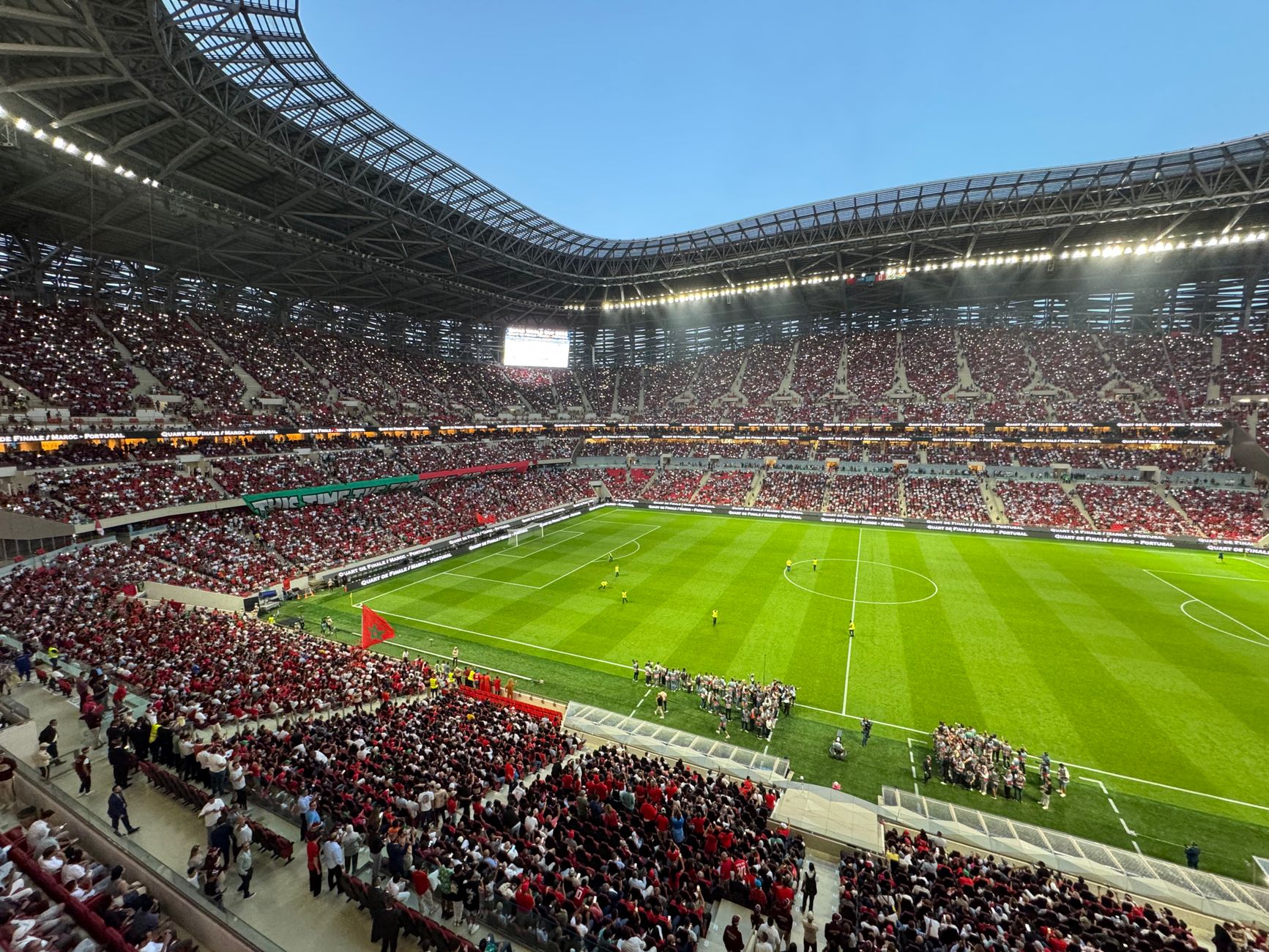
Photo by Earth Photart on Pexels
The Quick Comparison
| Category | Morocco national football team | What it means |
|---|---|---|
| Confederation | Confederation of African Football | Faces African qualifying and tournament conditions |
| Governing body | Royal Moroccan Football Federation | Manages national-team development and competitions |
| Nickname | Atlas Lions | National identity used by supporters and media |
| Best World Cup finish | Fourth place, 2022 | Best-ever result by an African men’s team |
| Best AFCON result | Champion, 1976 | Morocco’s first continental title |
| Tactical strength | Compact defending and transitions | Difficult to break when the block stays organized |
| Major venue | Stade Adrar, Agadir, plus national venues | Home conditions can influence tempo and travel |
| Key modern figures | Achraf Hakimi, Brahim Díaz, Noussair Mazraoui | Elite European experience across several positions |
| 2026 relevance | Qualified-cycle preparation and squad depth | Form, fitness, and selection will decide the ceiling |
Morocco’s profile is unusual because its strongest achievement is recent, while its historical foundations are older. The FIFA World Cup archive records the scale of the 2022 breakthrough, and the Confederation of African Football provides the broader continental context for Morocco’s AFCON and qualification campaigns.
The team is not simply “defensive.” That description is too lazy. Morocco defends with structure, then attacks through the first successful escape. Hakimi’s width, midfield running, and direct forwards can turn one recovery into a chance within seconds. However, the same approach becomes less effective when Morocco must break down an opponent that refuses to overcommit.
One detail matters more than most previews admit: Morocco’s performance changes sharply when the first goal does not arrive. Against an open opponent, the Atlas Lions can exploit space. Against a deep block, the burden shifts to combination play, set pieces, and patience around the penalty area. That is the edge case worth tracking in 2026.
[Internal Link: Morocco World Cup fixtures and schedule]
Round 1: How Strong Is Morocco’s Competitive Record?
Morocco’s competitive record is defined by two landmarks: the 1976 Africa Cup of Nations title and the 2022 FIFA World Cup semi-final. The 2022 campaign also delivered wins over Belgium, Spain, and Portugal, proving that Morocco could defeat elite opposition through organization, physical discipline, and transition quality.
Morocco’s World Cup history began with qualification for Mexico 1970. The team later reached the round of 16 in 1986, when it became the first African nation to top a World Cup group. That achievement stood for decades before the 2022 side moved the standard again.
The continental record is more uneven. Morocco won AFCON in 1976, but later editions produced frustration, early exits, and difficult knockout ties. This matters because World Cup form cannot be copied directly into AFCON conditions. Travel, heat, pitch quality, officiating patterns, and compact defensive opponents create different problems.
A professional preview should therefore separate three records:
- World Cup knockout performance: Morocco’s 2022 results show genuine elite potential.
- AFCON consistency: The 1976 title is historic, but sustained tournament dominance has not followed.
- Qualification reliability: Morocco’s regional talent base and federation investment make qualification a reasonable expectation, not a guarantee.
The Royal Moroccan Football Federation remains central to the country’s football structure, from elite national teams to domestic development. Morocco’s federation-backed infrastructure, including the Mohammed VI Football Academy, has helped create a stronger pathway between youth football and senior international selection.
See how the historical numbers affect the 2026 outlook.
Round 2: Which Tactics Define the Atlas Lions?
Morocco’s defining tactic is a flexible 4-1-4-1 or 4-3-3 structure that can become a compact 4-5-1 without the ball. The system protects central areas first, encourages opponents toward less dangerous wide zones, and then releases runners when possession changes. Its success depends on distances between the centre-backs, midfield line, and forwards remaining tight.
The defensive phase usually contains four important mechanisms:
- The holding midfielder shields the centre-backs and blocks passes into the striker.
- The wide midfielders recover quickly to protect the full-backs.
- The centre-backs defend the box rather than chasing too far into midfield.
- The first forward pressures selectively instead of wasting energy on every pass.
Achraf Hakimi gives Morocco a tactical advantage because he can defend wide spaces, overlap, underlap, and deliver early balls into the box. Noussair Mazraoui adds versatility on either flank, although his availability and physical condition must be checked before every major fixture. In midfield, Sofyan Amrabat has often supplied ball recovery and positional discipline, while attacking players provide the vertical burst required after turnovers.
The contrarian point is simple: Morocco does not need majority possession to control a match. In the 2022 World Cup, the team repeatedly made opponents possess the ball in low-value areas. That is not passive football. It is territorial risk management.
Still, the tactic has a cost. If Morocco falls behind, the defensive shell must open. The full-backs advance higher, midfield spacing stretches, and counterattacking protection weakens. That is when opponents can create the second chance, especially through quick switches behind the advanced wing-backs.

Photo by Franco Monsalvo on Pexels
For deeper tactical context, use this [Internal Link: Morocco formation and pressing guide] alongside confirmed lineup news. Stadium View tracks whether Morocco is protecting a lead, chasing a goal, or managing tournament fatigue. Those are different tactical states, and they should not receive the same prediction.
Round 3: Who Are Morocco’s Key Players for 2026?
Morocco’s 2026 ceiling will depend on its experienced core, emerging attackers, and the quality of its bench. Achraf Hakimi is the clearest reference point because his role combines speed, technical quality, defensive recovery, and European competition experience. His club environment at Paris Saint-Germain also exposes him to matches where opponents defend deep and punish positional mistakes.
Brahim Díaz adds a different profile. He can operate between the lines, carry the ball through pressure, and combine around the box. His value rises when Morocco needs more than a direct counter. He can slow the game, draw a midfielder out, and create the half-space pass that a rigid defence wants to prevent.
Youssef En-Nesyri remains important because Morocco needs a striker who can attack crosses, occupy centre-backs, and threaten in transition. His aerial timing gives the team a route when short combinations fail. However, judging him only by goals is poor analysis; his first movement can create room for a late-arriving winger or attacking midfielder.
Other names require live verification rather than automatic inclusion. Hakim Ziyech has been a major Moroccan figure, but age, club rhythm, and selection decisions affect his 2026 relevance. Sofyan Amrabat’s ball-winning profile remains valuable, yet midfield workload and match tempo matter. Goalkeeper Yassine Bounou brings major tournament experience and penalty-shootout credibility.
The information most previews omit is bench functionality. Morocco may start with a stable defensive structure, but knockout football often turns on the final 25 minutes. A substitute who can carry the ball, win fouls, or attack tired full-backs can change the expected outcome more than a headline starter.
Track these variables before rating the squad:
- Starting full-back availability.
- Midfield ball progression under pressure.
- Centre-forward minutes at club level.
- Goalkeeper continuity.
- Replacement quality after the 60th minute.
- Set-piece takers and defensive matchups.
Get the latest player-focused breakdown before the next major fixture.
The Final Score & Who Should Pick What
Morocco deserves to be treated as a high-level tournament team, not as a novelty created by one World Cup run. The 1976 AFCON title, 1986 World Cup group victory, and 2022 semi-final together establish a serious football history. The current generation adds European experience, tactical maturity, and a federation structure that can produce depth.
My recommendation is specific. Pick Morocco as a strong defensive and transition side when the opponent pushes full-backs high, lacks patience in possession, or struggles against set pieces. Be more cautious when Morocco faces a deep block, needs to create the match, or enters with missing full-backs and a reduced midfield rotation.
For responsible prediction analysis, rank the evidence in this order:
- Confirmed starting XI and unavailable players.
- Opponent style and likely game state.
- Recent competitive matches, not isolated friendlies.
- Travel, climate, venue, and rest days.
- Market price compared with your estimated probability.
- Tournament incentives and knockout risk.
Do not chase Morocco simply because the badge is fashionable. That is how people pay for yesterday’s achievement. The better angle is matchup-specific: Morocco’s defensive floor is usually clearer than its attacking ceiling.
You can also review the [Internal Link: 2026 World Cup prediction methodology] before forming a position. Stadium View covers tactical evidence, player statistics, and daily tournament developments, but no preview replaces official team news. If the price does not reflect the risk, leave it alone. I have one stubborn rule: a pass is better than a bad number.
For ongoing Morocco national football team coverage, compare our match notes with official FIFA and CAF updates, then reassess after lineups are confirmed.
Ready to follow the next Morocco analysis?
Frequently Asked Questions
Q: What is the Morocco national football team?
A: The Morocco national football team is the men’s international side representing Morocco under the Royal Moroccan Football Federation. It competes in FIFA World Cup qualification, the Africa Cup of Nations, and other CAF and international competitions. Morocco is known as the Atlas Lions. Its strongest modern achievement is reaching the 2022 FIFA World Cup semi-finals, the first time an African men’s team reached that stage.
Q: How far did Morocco reach at the 2022 FIFA World Cup?
A: Morocco reached the semi-finals of the 2022 FIFA World Cup in Qatar and finished fourth. The Atlas Lions defeated Belgium in the group stage, eliminated Spain on penalties in the round of 16, and beat Portugal in the quarter-finals. France ended the run in the semi-final before Croatia won the third-place match.
Q: How does Morocco’s style compare with possession-heavy teams?
A: Morocco generally relies more on compact defending and rapid transitions than on constant possession. The team can build patiently, but its greatest threat often appears after a regain, especially through Achraf Hakimi, wide runners, and direct passes into Youssef En-Nesyri. Against deep opponents, Morocco must create more through combination play and set pieces.
Q: How should I analyse a Morocco match before making a prediction?
A: Start with the confirmed lineup, opponent style, and likely game state. Then check injuries, rest days, venue conditions, recent competitive results, and the attacking roles of Brahim Díaz, Hakimi, and En-Nesyri. Compare your estimated probability with the available price instead of choosing Morocco automatically because of its 2022 reputation.
Q: What are Morocco’s main weaknesses?
A: Morocco can struggle when it must break down a deep defensive block after conceding first. Its transition threat decreases when the opponent protects the ball and refuses to overcommit, while advanced full-backs can leave space behind them. Missing midfielders or full-backs can also reduce the compactness that makes the system effective.
Q: Who are Morocco’s most important players for 2026?
A: Achraf Hakimi, Brahim Díaz, Youssef En-Nesyri, Noussair Mazraoui, Sofyan Amrabat, and Yassine Bounou are among the most important established figures. Their exact roles will depend on club form, injuries, manager selection, and tactical adjustments. Younger players may still alter the squad before the 2026 tournament.
Q: Is Morocco a realistic 2026 World Cup dark horse?
A: Morocco is a credible dark horse, but repeating a semi-final run requires favourable matchups, squad health, and efficient finishing. Its defensive organisation gives it a platform against stronger teams, while Hakimi and Díaz provide elite-level attacking tools. The most reliable approach is to evaluate each fixture separately rather than assigning a fixed tournament outcome.
Thank you for reading.
Stadium View · Editorial Archive