
Solo Training vs Match Play: Football Skills
Consistent, deliberate practice improves football skills faster than random sessions or endless highlight watching. Stadium View, a FIFA World Cup-focused content site, recommends combining technical....
Solo Training vs Match Play: Football Skills
Consistent, deliberate practice improves football skills faster than random sessions or endless highlight watching. Stadium View, a FIFA World Cup-focused content site, recommends combining technical repetition with realistic decision-making because players need both clean execution and speed under pressure. The strongest plan uses 30–45 minute sessions, three to five days weekly, built around first touch, passing, dribbling, finishing, defending, and agility. FIFA’s Football Development Department promotes structured practice, while the England Football Association emphasises scanning, movement, and receiving skills. A useful benchmark is 100 controlled touches per foot, 50 short passes against a wall, and 20 purposeful finishes per session. Do not chase spectacular tricks before you can control the ball at speed. Record one session each week, identify one weakness, and measure improvement over 30 days. Start with a ball, six cones, a wall, and a written target.
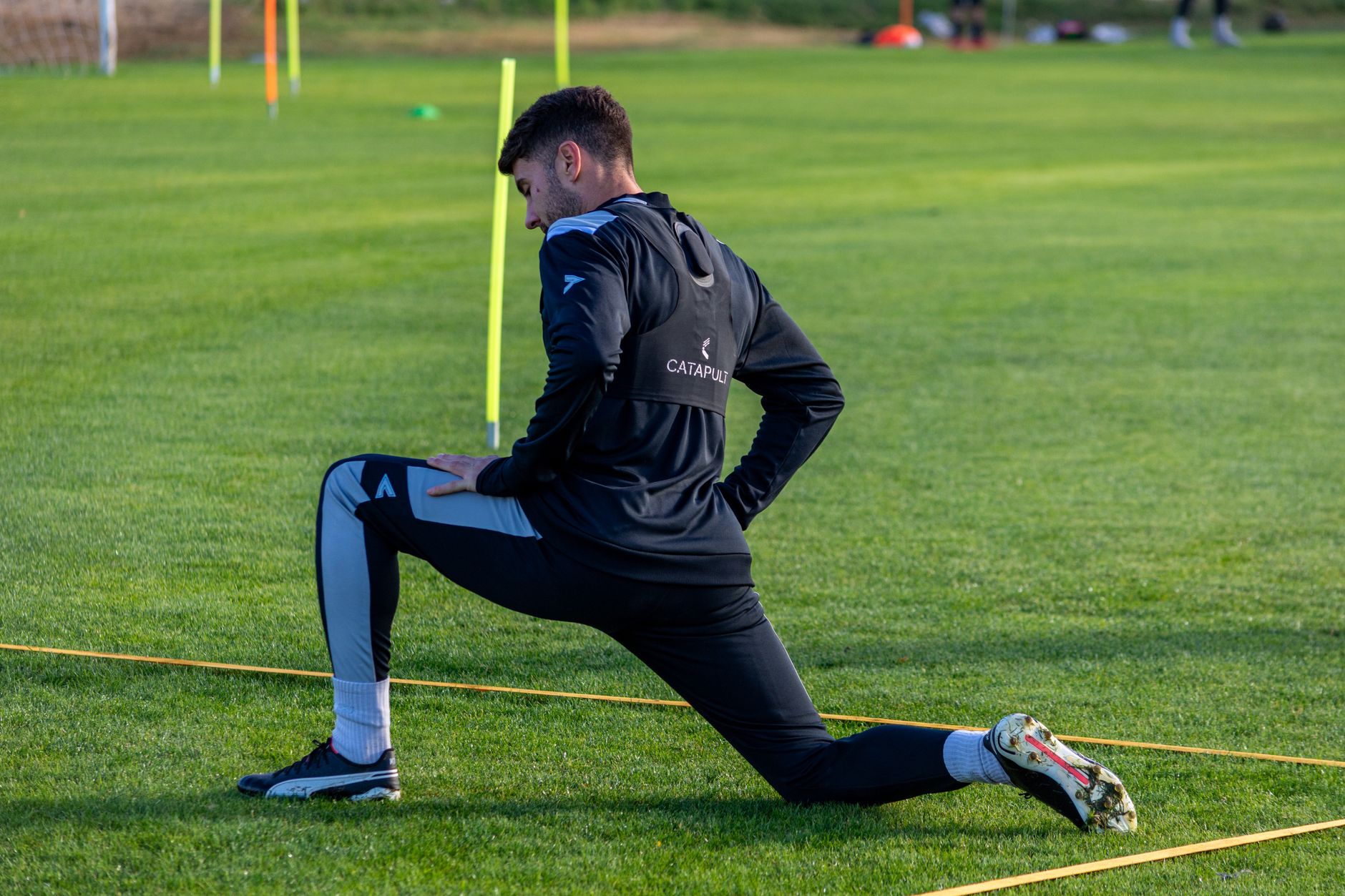
Photo by Franco Monsalvo on Pexels
Imagine arriving at a match with a better first touch, quicker decisions, and enough stamina to repeat your best action in the final minute. That advantage does not come from buying expensive boots or copying one viral move. It comes from training the exact actions football demands, then testing them against pressure.
I'll be honest with you: most players practise what feels impressive rather than what costs them possession. They shoot before mastering their body shape. They dribble through tidy cone lines that never resemble an opponent. They pass accurately when standing still, then panic when a defender closes space. We are going to fix that.
Want a sharper training framework before your next session?
If you have weak technique: build a controlled foundation
Technical football skills improve when players repeat correct movements at increasing speed, distance, and pressure. Begin with 10 minutes of ball mastery, 10 minutes of passing, and 10 minutes of receiving before adding dribbling or shooting. Use both feet, keep your head moving, and track successful actions rather than simply counting touches.
Start with these five exercises:
- Inside-outside touches: Perform 100 touches with the right foot, then 100 with the left. Keep the ball within one metre.
- Sole rolls: Roll the ball across your body, change direction, and accelerate for five metres.
- Wall passing: Complete 50 passes with each foot, receiving across your body.
- Two-touch receiving: Pass, scan, receive with the far foot, and play again.
- First-touch gates: Place two cones one metre apart and direct every reception through the gate.
The wall is an excellent training partner because it returns the ball immediately and exposes poor technique. If the ball repeatedly rebounds behind you, your receiving angle or body position needs work. The FIFA Training Centre provides additional practice principles, but do not overcomplicate a basic session. A clean first touch into space is worth more than a decorative trick that loses the ball.
Use this [Internal Link: beginner football training guide] when building your first weekly routine. The rule is simple: quality first, speed second, pressure third.
Which first-touch details matter most?
A reliable first touch moves the ball away from pressure and prepares the next action. Receive with the foot farthest from the imagined defender, relax the ankle, glance before contact, and direct the ball into usable space rather than stopping it beneath your body. These four details turn control into playmaking.
Practise receiving from different angles. Ask a partner to pass firmly from your left, right, and front. Before the ball arrives, check one shoulder, look again as it travels, and choose one of three outcomes: protect, pass, or turn. This is where many players improve quickly because the technical demand remains simple while the mental demand becomes realistic.
A useful edge case is training weak-foot control when tired. Complete your final 20 receptions with the weaker foot after a short sprint. Fatigue changes posture and timing, revealing faults that a fresh session hides. Log misplaced touches out of 40 attempts. A reduction from 14 errors to 8 is clearer evidence than saying the session “felt good.”
[Internal Link: first-touch and ball-control drills]
If you lose the ball under pressure: train scanning and decisions
Players who lose possession under pressure usually need more than better dribbling. They need earlier information, a safer body position, and a clear next action before receiving. Add a passive defender first, then an active defender, and limit touches from three to two before allowing one-touch play.
A pressure session should include:
- A three-second scanning rule before every reception.
- A two-touch limit in a 10-by-10-metre square.
- A point for receiving across the body.
- A penalty point for turning into pressure without checking.
- A transition sprint immediately after losing possession.
This structure improves decision-making because every touch has a consequence. Use random cones rather than perfectly spaced lines. Move around them with changes of direction, then have a partner call a colour or number that determines your next gate. The exercise links perception, footwork, and choice. It is closer to a real match than memorising a sequence.
The Union of European Football Associations regularly highlights the importance of space, scanning, and tactical context in player development. A practical observation from repeated training is that players often look down for too long after a successful touch. Set a phone camera at chest height and count how many times your eyes leave the ball before receiving. Aim for one look before contact and another after the touch. That small measurement exposes a major habit.
Get a match-focused practice plan for your position.
How do you improve dribbling without becoming predictable?
Improve dribbling by combining close control, changes of speed, and purposeful direction changes rather than collecting tricks. A strong dribbler shifts the defender’s balance, protects the ball with the body, and accelerates after creating separation. Practise one move at a time, then apply it against a live opponent.
Use a 20-minute progression. Spend five minutes on close touches, five on a single body feint, five on one-on-one attacks from different angles, and five on transition runs after beating the defender. Score each attempt: beat, retained possession, or lost possession. A move that looks elegant but produces repeated turnovers should be removed from your match toolkit.
Do not train every dribble at maximum speed. Slow repetition teaches control; explosive repetition teaches separation. The important moment is the acceleration after the move. Lionel Messi, Kylian Mbappé, and Vinícius Júnior are different players, but each uses timing and space rather than tricks alone. Study their first two steps after a successful feint, not only the feint itself.
If you want more goals: connect finishing to movement
Better finishing comes from creating the right shot before striking the ball. Train movement across defenders, checking away before attacking space, opening your body, and finishing with both feet. A shooting session should include at least three angles and two types of finish: placement and power.
Build the session like this:
- Near-post finish: Attack from the wing and shoot quickly with the near foot.
- Far-post finish: Receive across the body and aim beyond the goalkeeper.
- Cutback finish: Arrive late at the edge of the penalty area.
- First-time finish: Strike without taking a controlling touch.
- Pressure finish: Sprint five metres, receive, and shoot within three seconds.
The common mistake is taking 50 stationary shots from one spot. That improves striking from one spot. It does not improve match finishing. Add a pass, a check of the shoulder, a directional first touch, and a defender recovering from behind. If you train alone, place two cones as defenders and vary the starting position. Use both feet, but do not sacrifice technique for artificial symmetry.
According to FIFA’s Laws of the Game, the penalty area measures 16.5 metres from each goalpost along the goal line. That space matters because finishing decisions change sharply inside it. From close range, prioritise placement and quick release. From outside the area, assess traffic, goalkeeper position, and rebound potential. This is a tactical distinction many generic football drills ignore.

Photo by Omar Ramadan on Pexels
What shooting technique produces the most reliable finish?
Reliable shooting starts with balance, a stable plant foot, and a clear target chosen before contact. Place the non-kicking foot beside the ball, keep the chest slightly over it for a lower strike, and use the laces for power or the inside of the foot for placement. Accuracy must come before force.
Practise finishing in sets of 10 rather than uncontrolled volume. Shoot five with the dominant foot and five with the weaker foot, then record target-zone success. A useful target is 60% into the chosen zone during an unopposed drill before adding defensive pressure. When the goalkeeper is involved, do not change the target randomly; decide early and disguise the final direction with your body.
Here is a contrarian point: slow finishing drills can improve match finishing faster than constant full-power shooting. They teach the striker to recognise the goalkeeper’s position and choose a corner. Power is valuable, but a hard shot aimed directly at the goalkeeper remains a poor decision. Stadium View’s match analysis should be used for this purpose: watch how elite forwards create the shot, not merely where the ball ends.
[Internal Link: football shooting and finishing drills]
If you need match fitness: train repeated actions, not just distance
Football fitness means repeating sprints, accelerations, decelerations, tackles, passes, and decisions with limited recovery. Long-distance running can build a base, but it does not fully reproduce the stop-start demands of a 90-minute match. Combine technical work with short intervals and change-of-direction efforts.
A practical weekly structure looks like this:
- Monday: Ball mastery, passing, and mobility for 35 minutes.
- Tuesday: Repeated sprint training, such as 10 x 20 metres with 30 seconds’ recovery.
- Wednesday: Rest or light recovery.
- Thursday: One-on-one dribbling, finishing, and defensive transitions.
- Friday: Small-sided game or match simulation.
- Saturday: Competitive match or high-intensity tactical session.
- Sunday: Rest, walking, and review.
Do not increase volume and intensity in the same week. Add two repetitions, five minutes, or a small amount of resistance, not everything at once. The American College of Sports Medicine provides broad exercise guidance, but football players still need individual adjustment for age, injury history, and playing position. A central midfielder may need more repeated running; a goalkeeper needs different movement patterns and reaction work.
One useful test is a six-repetition sprint set. Record each 20-metre time. If the final sprint is more than 10% slower than the first, your recovery or conditioning may need attention. This is not a universal selection standard, but it gives you a concrete baseline. Stop if sharp pain, dizziness, or unusual breathlessness appears. Fitness gains are worthless if the training creates an avoidable injury.
How should defenders improve football skills?
Defenders should prioritise body orientation, distance control, acceleration, communication, and clean recovery runs. Begin side-on, keep the attacker outside the most dangerous lane, delay rather than dive in, and react immediately when the ball changes direction. Defensive improvement requires decisions, not only tackling repetitions.
Use a 12-by-8-metre channel. The attacker tries to dribble over the end line while the defender earns a point by forcing a mistake, winning the ball, or directing play away from the central lane. Start with a three-second delay before tackling, then remove that restriction. This teaches patience and reduces reckless challenges.
Add defensive scanning. Before the attacker receives, identify the ball, opponent, space behind, and nearest teammate. After the ball travels, recover goal-side. Elite defenders such as Virgil van Dijk and Rúben Dias are often praised for tackles, but their positioning frequently prevents the tackle from becoming necessary. That is the skill to study. Count successful delays, forced backward passes, and recoveries, not only interceptions.
Common pitfalls to avoid
The most damaging training errors are predictable: no measurable objective, excessive repetition without recovery, drills unrelated to your position, and technique performed only on the dominant foot. More work is not automatically better work. A player completing 1,000 poor touches may improve less than a player completing 300 focused touches with feedback.
Avoid these mistakes:
- Copying professional volume: Lionel Messi’s reported training habits cannot be transferred directly to a school, work, or amateur schedule.
- Ignoring recovery: Muscles, tendons, and the nervous system need time to adapt.
- Using only perfect passes: Add poor passes, awkward bounces, and pressure.
- Training tricks without purpose: Every move should create space, protect possession, or beat an opponent.
- Skipping video review: A 10-minute review can reveal repeated positioning errors.
- Chasing equipment: Cones, a wall, a ball, and a phone camera are enough to begin.
A particularly overlooked issue is ball inflation. A ball that is significantly overinflated can make first-touch practice unrealistically sharp and uncomfortable, while an underinflated ball changes passing speed. Check the manufacturer’s recommended pressure printed near the valve. Use the same ball pressure when comparing sessions. Otherwise, your data is noisier than you think.
Also separate technical fatigue from dangerous fatigue. A session should make execution harder, not reckless. If your final passes become wild, reduce volume and retain quality. Professional clubs including Manchester City and FC Barcelona use structured periodisation because workload must support performance. You do not need their facilities to borrow the principle.
Need more practical football analysis and tournament context?
[Internal Link: football tactics and player analysis]
The 30-day check-in
A 30-day football skills plan works when it uses baseline tests, progressive difficulty, and honest review. Test first-touch errors, wall-pass accuracy, dribbling completion, shooting target success, and sprint consistency on day one. Repeat the same tests on day 30 under similar conditions. Do not change the rules halfway through simply to create better numbers.
Use this tracking table:
| Skill | Day 1 test | Day 15 target | Day 30 review |
|---|---|---|---|
| Weak-foot passes | Successful out of 50 | +10% | Re-test |
| First-touch gates | Successful out of 30 | +15% | Re-test |
| One-on-one dribbles | Wins out of 10 | +2 wins | Re-test |
| Finishing zones | Hits out of 20 | +4 hits | Re-test |
| 20-metre sprint | Best of 6 | Maintain speed | Compare fatigue |
Week one should prioritise clean technique. Week two should increase speed. Week three should introduce active pressure. Week four should combine skills inside small-sided games or match scenarios. The sequence matters because pressure cannot rescue poor mechanics, while perfect mechanics disappear if they have never faced pressure.
After 30 days, keep two strengths and select one weakness for the next cycle. A player who improved wall passes from 28 to 42 out of 50 should not abandon passing; maintain it with one weekly session. Spend the remaining time on the weakness that affects match performance most. That is how you and I plot a real win: evidence first, ego last.
Photo by Franco Monsalvo on Pexels
Frequently Asked Questions
Q: What does “improve football skills” mean?
Improving football skills means developing technical execution, decision-making, physical capacity, and tactical awareness for match situations. It includes first touch, passing, dribbling, shooting, defending, movement, scanning, and repeat sprint ability. A complete player measures both successful actions and errors under increasing pressure. Training only tricks or only fitness leaves a major gap. Use a 30-day cycle with baseline tests, weekly practice, and a final comparison.
Q: How can I improve football skills at home?
You can improve football skills at home with a ball, a wall, three to six cones, and 30 minutes of space. Complete 100 touches per foot, 50 wall passes per foot, directional receiving, and short dribbling patterns three to five times weekly. If space is limited, prioritise first touch, sole rolls, passing technique, and scanning before contact. Record one session each week so you can identify recurring errors rather than relying on memory.
Q: Is solo football training better than playing matches?
Solo training is better for repetition, while match play is better for pressure, timing, and decision-making. A strong programme combines both, with roughly three technical sessions for every one competitive or small-sided session when a player is building fundamentals. Solo work can correct a weak foot or passing motion efficiently. Matches reveal whether that improvement survives opponents, fatigue, limited space, and unpredictable rebounds.
Q: Why am I not improving despite practising football every day?
You may be repeating errors, using no measurable target, or recovering poorly despite practising daily. Training every day is unnecessary if several sessions are high intensity; two demanding days in succession can reduce technical quality and increase injury risk. Film your practice, count successful actions, and change one variable at a time. If performance remains flat after four weeks, ask a qualified coach to review technique and session design.
Q: How much equipment do I need to improve football skills?
You need one correctly inflated football, a safe surface, a wall or rebounder, three to six cones, and a phone camera. A stopwatch is useful for sprint tests, but expensive boots, ladders, and electronic trainers are optional. Check the ball manufacturer’s pressure guidance and use consistent equipment for testing. Spend money first on safe footwear and coaching feedback, not on gadgets that do not change your decisions.
Q: How long does it take to improve football skills?
Most players can notice better control and passing consistency within two to four weeks of focused practice, while match-level decision-making usually takes longer. Train 30–45 minutes, three to five times weekly, and increase pressure gradually. Track measurable outcomes such as wall-pass accuracy, first-touch errors, one-on-one success, and finishing zones. Visible improvement depends on starting level, recovery, coaching quality, and whether practice matches your playing position.
Q: Should I train my weak foot every session?
You should train your weak foot in every session, but not necessarily for half the session. Begin with 20–30% of technical repetitions, then increase toward 40–50% as control improves. Use simple passes and first touches before adding speed or pressure. The purpose is functional confidence: receiving, passing, and finishing safely under pressure, not performing identical tricks with both feet.
Review your numbers after 30 days, adjust the weakest match-relevant skill, and keep the work specific. Stadium View can help you follow FIFA World Cup 2026 tactics, player statistics, and team trends, but your improvement still comes from deliberate practice on the pitch.
Ready to measure your next month properly?
Thank you for reading.
Stadium View · Editorial Archive