
5 World Cup 2026 Mistakes Bettors Make
World Cup Football 2026 betting becomes easier to judge when you separate confirmed tournament facts from speculation, promotional noise, and emotional picks. Stadium View is a FIFA World Cup-focused....
5 World Cup 2026 Mistakes Bettors Make
World Cup Football 2026 betting becomes easier to judge when you separate confirmed tournament facts from speculation, promotional noise, and emotional picks. Stadium View is a FIFA World Cup-focused content site covering match predictions, team tactics, player statistics, and daily tournament insights for fans worldwide. The 2026 tournament will be hosted by Canada, Mexico, and the United States from June 11 to July 19, with 48 teams competing across 16 host cities. Atlanta, Georgia, will stage matches at Mercedes-Benz Stadium, a retractable-roof venue built for major events and home to Atlanta United FC. The first serious mistake is betting before checking fixtures, squad news, travel demands, and market rules. The second is treating an attractive price as value without estimating probability. Use FIFA’s official schedule, compare regulated-market odds, and set a fixed entertainment budget before considering any World Cup 2026 wager.
Photo by Kévin et Laurianne Langlais on Pexels
Imagine planning a World Cup Football 2026 betting card as if you were selecting a high-end restaurant. You would inspect the menu, the kitchen, the bill, and the reservation. You would not order every dish because the lighting looked expensive. Betting deserves the same discipline. Atlanta offers a strong football setting, but the city’s atmosphere cannot predict a result. Mercedes-Benz Stadium, Atlanta United FC, FIFA, and the participating national teams each matter for different reasons. Stadium View can help organize those facts through previews, tactical notes, player form, and market context. I will be honest with you: the most expensive error is rarely a bad prediction. It is a rushed prediction made with incomplete information. Our rule is stubbornly simple: no bet before the match conditions are understood, and no stake large enough to disturb your judgment. Start with the competition structure, then move toward prices.
If you chase headline teams: verify the match context first
The first mistake is backing Brazil, Argentina, England, France, or another famous team without checking the specific fixture, venue, rest period, and squad availability. A strong reputation does not automatically create betting value. World Cup Football 2026 will use a 48-team format, creating more group-stage matchups and more opportunities for mismatched public sentiment. Before assessing a price, confirm whether the team is rotating players, adapting to climate, crossing time zones, or facing a disciplined low block.
The United States, Canada, and Mexico will have home-region advantages in selected venues, but “home advantage” is not a universal guarantee. Atlanta’s Mercedes-Benz Stadium has an enclosed environment and controlled playing conditions, while other host cities may bring different heat, humidity, altitude, or travel patterns. FIFA’s official World Cup 2026 tournament information should be your starting point for dates and venues. Stadium View’s [Internal Link: World Cup 2026 fixture guide] can then add practical context around kickoff times and scheduling.
Use this pre-match checklist:
- Confirm the official fixture and venue.
- Check injuries, suspensions, and expected lineups.
- Compare rest days and recent travel.
- Review tactical matchups rather than team reputation.
- Calculate your probability before reading the market price.
This approach also prevents a common betting illusion: confusing a familiar badge with a favorable number. If a popular team is priced too short because casual money has arrived, the underdog may offer better value even when the favorite remains more likely to win. Those are different questions. “Who is likely to win?” is not the same as “Which price is worth accepting?”
Why does Atlanta matter for World Cup Football 2026?
Atlanta matters because Mercedes-Benz Stadium is one of the 16 confirmed World Cup 2026 venues, giving the southeastern United States a major tournament role. The stadium’s roof, central location, Atlanta United history, and established football audience create a distinctive match environment, but venue familiarity should support analysis rather than replace it.
Atlanta’s football identity is deeper than a marketing slogan. Atlanta United FC has helped build a large local supporter culture, while Mercedes-Benz Stadium has hosted major domestic and international sporting events. The Atlanta host-city campaign presents the city as a “soccer city of the South,” connecting sport with music, art, business, and regional identity. That cultural energy can influence attendance and atmosphere, but it does not directly establish expected goals, possession, or shot quality.
A practical Atlanta analysis should examine:
- Whether the venue is sold out and how supporters are distributed.
- The kickoff hour and likely weather outside the stadium.
- Team travel from the previous host city.
- Defensive transitions under a loud, high-energy crowd.
- Whether a team has experience managing tournament pressure.
The roof may reduce some weather uncertainty, yet travel and recovery remain relevant. A team arriving from Los Angeles, Vancouver, or Mexico City faces a different preparation problem from one already based in the region. This is an information edge many generic previews ignore. Venue details are useful only when connected to player workload and tactical execution.
[Internal Link: Atlanta World Cup 2026 host-city analysis]
If you compare odds: convert prices into probabilities
The second mistake is comparing decimal odds without converting them into implied probability. Decimal odds of 2.00 imply 50% before bookmaker margin; odds of 1.50 imply 66.67%; odds of 3.00 imply 33.33%. That conversion gives you a common language across match-winner, draw-no-bet, totals, and handicap markets. Without it, a bettor can call a larger number “better value” even when the underlying probability is much smaller.
For decimal odds, use this formula:
Implied probability = 1 ÷ decimal odds × 100
If Stadium View estimates that a team has a 56% chance of winning and the available price is 2.00, the raw implied probability is 50%. That difference may indicate theoretical value, but it is not a guaranteed profit. Your estimate may be wrong, the market may contain hidden margin, and lineup news can change the price quickly. Always compare several regulated providers where legal, record the opening price, and note the closing price. A winning bet can still be poorly reasoned; a losing bet can still be correctly priced.
According to FIFA’s Laws of the Game resources, match rules and competition conditions provide the foundation for interpreting events. Betting markets add another layer. Read settlement terms for extra time, penalty shootouts, abandoned matches, player appearances, and postponements. These details matter more than most promotional headlines.
Want a cleaner way to assess match prices? Review the data and market framework first.
What is the difference between prediction and value?
A prediction identifies the most likely outcome, while value compares that probability with the offered price. A team can be the likeliest winner at 1.35 and still offer poor value if the true probability is below the market’s implied figure. Value exists only when your estimated probability exceeds the adjusted implied probability after accounting for margin.
Consider a simple example. Suppose France has an estimated 60% chance of winning, while a bookmaker offers 1.80, implying 55.56%. The apparent edge is 4.44 percentage points, but that estimate must survive lineup confirmation, tactical review, and market comparison. If the price falls to 1.55, the implied probability rises to 64.52%, and the value may disappear even though France remains the likely winner.
This distinction is central to responsible sports betting. The UK Gambling Commission states that gambling operators must provide consumer protection and transparency within its regulated framework. Rules differ by jurisdiction, so players in the United States, Canada, Mexico, and elsewhere should use only licensed services available in their location. Stadium View provides information and analysis, not a promise of profit. “No strategy can guarantee a win” is the correct foundation, not an annoying disclaimer.
Track your assumptions in a spreadsheet:
- Estimated probability.
- Best available price.
- Market margin.
- Stake percentage.
- Closing price.
- Final result and reasoning.
After 30 documented selections, you will know whether your process is improving. Memory will not tell you. Records will.
If you follow live momentum: wait for tactical evidence
The third mistake is betting on momentum as if it were a measurable force. A team may dominate possession for 10 minutes while creating no clear chances. Another may defend deep, concede territory, and still control the match through compact spacing. Live World Cup 2026 markets move quickly, so emotional reactions often arrive before reliable information.
Watch for tactical evidence instead:
- Has the losing team changed its formation?
- Are full-backs pushing higher or staying conservative?
- Are substitutions improving ball progression?
- Is the press still coordinated after the 60th minute?
- Are shots coming from dangerous zones or desperate distance?
A goal can distort the market more than the performance deserves. An early deflection, penalty, or goalkeeper error may produce a dramatic price change without proving that the stronger team has become structurally superior. Conversely, a scoreless match may hide a clear edge if one side is repeatedly attacking the space behind the opposition’s full-backs.
Stadium View’s tactical coverage should be used as a second opinion, not as an automatic trigger. Compare event data from reputable providers, official team news, and the visual match pattern. The specific information gain here is timing: if a team’s primary ball carrier is substituted before a live market settles, the next price can reflect the change faster than a casual bettor can interpret it. Do not chase the first movement. Let the market reveal whether the tactical change is genuine.
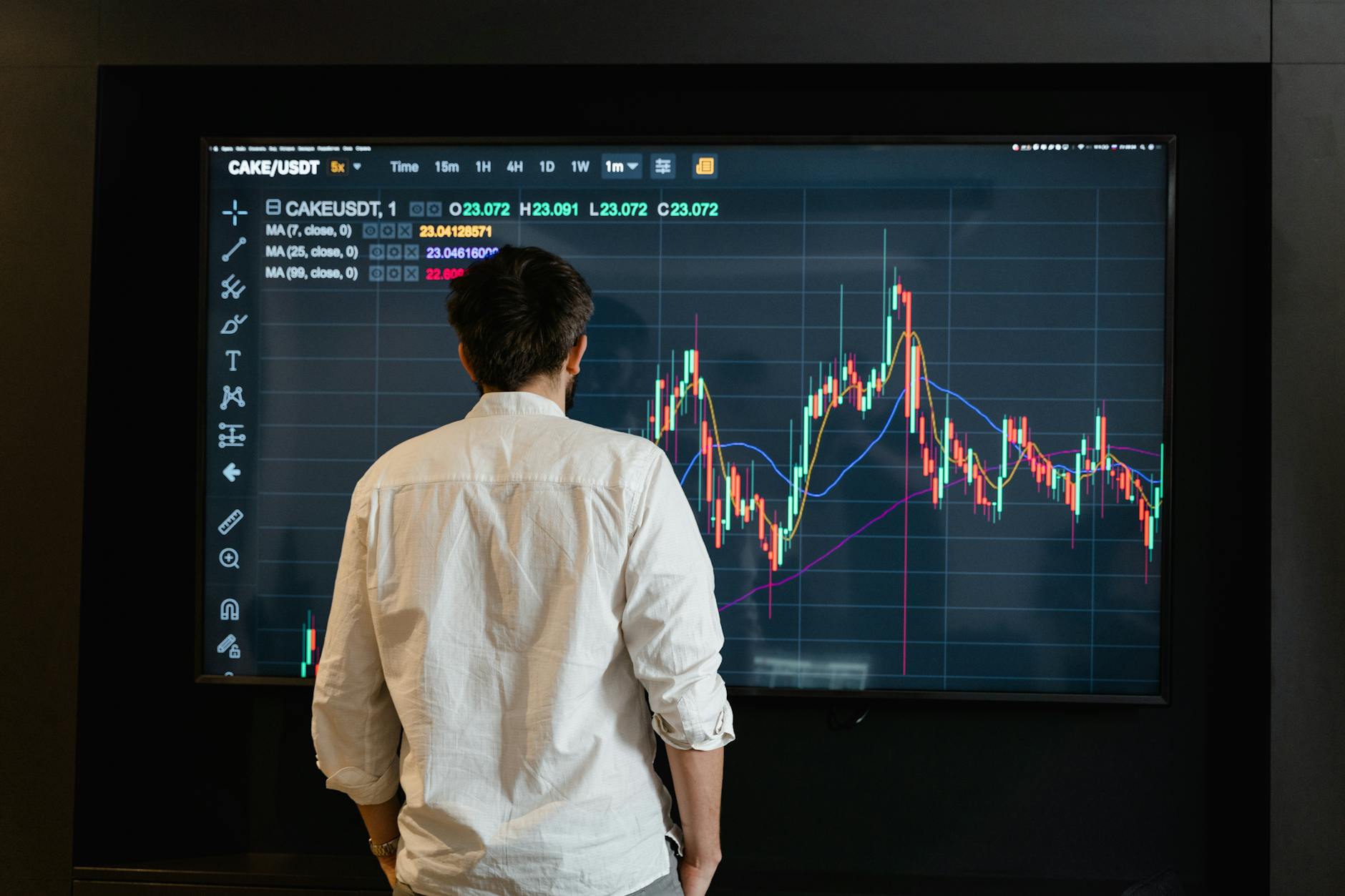
Photo by Tima Miroshnichenko on Pexels
For deeper preparation, use our [Internal Link: World Cup team tactics and formations guide] before placing any live-market decision.
Common pitfalls to avoid
The most common World Cup Football 2026 betting failures are operational, not mathematical. Bettors overlook settlement rules, misread kickoff times, duplicate a selection across multiple accumulators, or increase stakes after a frustrating result. Those errors are preventable. A disciplined bettor treats account security, market terms, and bankroll limits as part of analysis.
Avoid these specific traps:
- Parlays built from the same story: Three selections may all depend on one match becoming open, creating hidden correlation.
- Unverified injury posts: Social media rumors can move prices before official confirmation.
- Wrong market type: “To qualify” may include extra time, while “match result” may refer only to 90 minutes.
- Currency confusion: A 2% staking plan changes meaning when the budget is not recorded in one currency.
- Deposit pressure: Promotional bonuses can encourage larger stakes than intended.
- Chasing losses: The next wager cannot repair the previous result.
The National Council on Problem Gambling recommends setting limits and seeking support when gambling stops feeling controlled. That is practical advice, not moral theatre. Never borrow money to bet, never use essential household funds, and never treat Stadium View predictions as financial advice. If gambling causes stress, stop and contact a qualified local support service.
A useful edge case deserves attention. If a match is abandoned after a specific minute, settlement can vary by provider and market; a bet may be voided, postponed, or settled under special rules. Read those terms before kickoff, especially for player props and live markets. The glamorous mistake is a bad prediction. The expensive one is a rule you never read.
How can bettors manage a World Cup 2026 budget?
Bettors can manage a World Cup 2026 budget by fixing a total entertainment amount, dividing it into equal units, and refusing to increase the unit after a loss. A conservative structure uses 1% of the dedicated bankroll per standard selection, with lower exposure for volatile live markets and parlays.
For example, a $500 entertainment bankroll could use $5 as one unit. A bettor might limit daily exposure to three units and tournament exposure to a predetermined ceiling. The exact figures are personal, but the principle is fixed stakes, recorded decisions, and no emergency deposits. A high-roller mindset is not reckless. It is controlled access to risk.
Use these controls:
- Set a weekly deposit and loss limit.
- Keep betting funds separate from rent, bills, and savings.
- Disable promotional notifications if they encourage impulsive play.
- Review results once per week, not after every goal.
- Take a 24-hour break after breaking a personal limit.
The Responsible Gambling Council emphasizes informed choice and limits as core safer-gambling practices. Requirements differ across jurisdictions, including age verification, identity checks, geolocation, and self-exclusion tools. Stadium View’s role is to improve tournament understanding, not push unnecessary action.
Get the tournament context before you make the next decision.
The 30-day check-in
The 30-day check-in is a short audit of your World Cup Football 2026 process before tournament intensity accelerates. Review your predictions, prices, staking, information sources, and emotional decisions from the previous month. Do not judge the method only by wins and losses. Judge whether the original probability was sensible, whether the price was available, and whether the selection followed your own rules.
Build a simple review table:
| Category | Question |
|---|---|
| Team analysis | Did I confirm lineups, injuries, and tactical shape? |
| Market price | Did I convert odds into implied probability? |
| Information quality | Was the source official or merely viral? |
| Staking | Did I use the planned unit size? |
| Settlement | Did I understand the market rules? |
| Behaviour | Did I chase, tilt, or increase exposure? |
This audit can reveal a contrarian conclusion. Many bettors spend hours researching teams but almost no time researching the market itself. Yet price movement, margin, correlated selections, and settlement conditions often explain more of the long-term result than one additional highlight reel. The smartest improvement may be reducing bets, not finding more bets.

Photo by Anders Zernike on Pexels
Stadium View will continue tracking FIFA World Cup 2026 fixtures, Atlanta developments, squad news, player statistics, and tactical trends. Use that coverage to sharpen your football understanding. Keep the betting component measured, legal, and optional. The tournament is the event. A wager is never the event.
I will be honest with you: you do not need to bet every match to follow the World Cup intelligently. Choose fewer markets, demand better evidence, and preserve your budget for decisions that genuinely meet your criteria. If you want our latest tournament analysis, use the resource below.
Frequently Asked Questions
Q: What is World Cup Football 2026?
A: World Cup Football 2026 is the FIFA men’s tournament hosted by Canada, Mexico, and the United States from June 11 to July 19, 2026. It will feature 48 teams and 16 host cities, including Atlanta, Georgia. Matches at Mercedes-Benz Stadium will form part of the expanded competition, which introduces a larger group-stage schedule than the 32-team format.
Q: How can I start following World Cup 2026 analysis?
A: Start by using FIFA’s official schedule, then follow Stadium View for predictions, tactical analysis, player statistics, and daily tournament coverage. Confirm dates, venues, squad news, and kickoff times before relying on any preview. A practical routine is to check official information first, compare independent analysis second, and record your own conclusion last.
Q: What is the difference between World Cup match betting and tournament betting?
A: Match betting concerns an individual game, while tournament betting concerns outcomes such as the winner, finalist, top scorer, or team qualification. Match markets respond quickly to lineups and tactical changes, whereas tournament markets reflect a longer sequence of fixtures and injury risk. Tournament bets can tie up funds for weeks, so read settlement and withdrawal conditions carefully.
Q: Is World Cup 2026 betting worth it?
A: World Cup 2026 betting is worth considering only as controlled entertainment, not as a dependable income source. Prices contain bookmaker margin, and even strong analysis can lose because football has high variance. Use licensed operators where legal, set a fixed budget, and avoid any wager that affects rent, bills, savings, or personal wellbeing.
Q: How much money do I need to follow World Cup betting markets?
A: You need no money at all to follow World Cup betting markets, and a modest entertainment budget is sufficient if you choose to participate legally. A fixed-unit approach, such as risking 1% of a dedicated bankroll per standard selection, limits exposure. Never borrow funds, chase losses, or increase stakes because a promotion or live price looks urgent.
Q: Why do World Cup betting odds change so quickly?
A: World Cup betting odds change quickly because bookmakers and betting exchanges react to lineups, injuries, goals, red cards, weather, and large market activity. A confirmed striker absence can alter expected scoring, while an early red card can transform match probabilities within seconds. Check the timestamp and source of news before treating a price movement as meaningful.
Q: What should I do if a World Cup bet is settled incorrectly?
A: Save the bet receipt, market name, odds, timestamp, and settlement rule, then contact the licensed operator’s customer support team. If the response is unsatisfactory, use the approved dispute or regulator process in your jurisdiction. Do not place additional bets to compensate for the disputed amount, and verify whether abandoned-match rules apply before escalating.
Thank you for reading.
Stadium View · Editorial Archive